
Why Outdoor Kitchens Work Better When They’re Designed as Part of the Backyard

When planning an outdoor kitchen in The Woodlands, it’s easy to start with the grill, refrigerator, and appliances. But the best outdoor kitchens begin with something bigger — how the entire backyard is going to be used.
Start With How You Want to Use the Backyard
Before choosing appliances or countertop materials, the first question should be simple:
How do you want to use the space?
For some homeowners, the outdoor kitchen is mainly for grilling dinner a few nights a week. For others, it becomes the center of weekend entertaining, football games, family gatherings, or evenings around the pool.
Those uses require very different layouts.
A compact grilling station may be all one backyard needs. Another may work better with a full kitchen, bar seating, refrigerator, storage, sink, television, dining space, and a covered patio.
The goal isn’t to add the most features.
It’s to put the right features in the right places.

Shade Matters in The Woodlands
In Southeast Texas, an outdoor kitchen without enough shade can become uncomfortable during a large part of the year.
That’s why we often design the kitchen together with a patio cover, pergola, or other shade structure rather than treating them as separate projects.
A well-planned cover can protect the cooking and dining areas from direct sun while still keeping the backyard open and connected to the pool and landscape.
It also allows lighting, ceiling fans, televisions, and other features to be integrated into the design instead of added later as an afterthought.
Keep the Cook Connected to Everyone Else
One of the most common layout mistakes is positioning the grill so the person cooking has their back to everyone.
The better approach is to think about the outdoor kitchen the same way you would an indoor kitchen.
Where will people sit?
Where will drinks be served?
How will people move between the house, pool, dining area, and kitchen?
Where will guests naturally gather?
Sometimes turning the kitchen, adding an island, or changing the orientation of the bar makes a huge difference in how the entire backyard feels.
The person cooking should still feel like part of the gathering.

Give Yourself Enough Counter Space
Homeowners often focus first on appliances.
But usable counter space can be just as important.
You need room for food preparation, serving trays, drinks, utensils, and all of the little things that accumulate when people are outside entertaining.
A grill squeezed between two narrow pieces of countertop may look fine in a drawing, but it often becomes frustrating once the kitchen is actually being used.
Good outdoor kitchen design considers both the appliances and the working space around them.
Choose Appliances Based on How You Actually Cook
Not every outdoor kitchen needs every appliance.
Depending on the homeowner, the right combination might include:
- Built-in grill
- Outdoor refrigerator
- Sink
- Ice maker
- Side burner
- Griddle
- Smoker
- Pizza oven
- Trash storage
- Dry storage
The key is prioritizing the appliances you will actually use.
A thoughtfully designed smaller kitchen often works better than a large kitchen filled with equipment that rarely gets turned on.
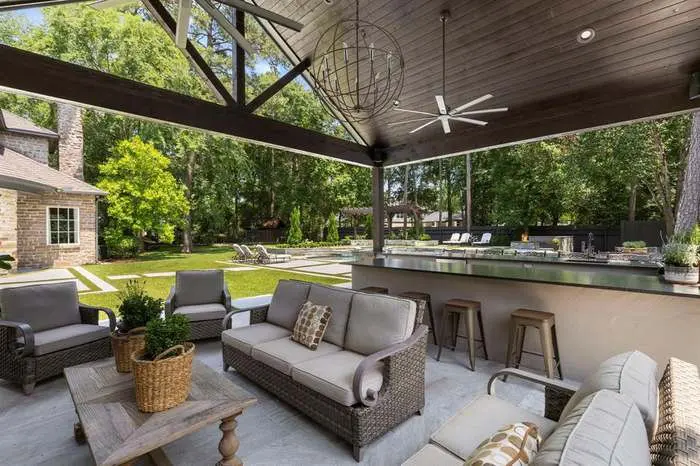
Think Beyond the Kitchen
Plan the Whole Space Before You Build
An outdoor kitchen works best when it’s considered alongside the rest of the backyard — the patio cover, pool, seating, landscape, lighting, and how people move between each area.
Even if everything isn’t built at once, planning those relationships early can make the finished backyard feel much more intentional and help avoid expensive changes later.
Thinking about an outdoor kitchen? See our OUTDOOR KITCHEN page for more information about how JM Outdoor Living approaches these projects.
Outdoor Kitchen Planning FAQs
Start with layout, shade, seating, traffic flow, utilities, and how the kitchen connects to the rest of the backyard.
It doesn’t have to be, but shade and weather protection can make the space much more comfortable and usable through the Texas heat and rain.
Yes. Planning the entire backyard first allows the kitchen, patio cover, pool, landscaping, and future features to work together even if they’re built at different times.